Why Storytelling Beats Statistics Every Single Time
Because people don’t decide with logic first. In a world overflowing with data, it’s easy to believe that numbers convince people. We lead with charts, percentages, and proof points, assuming logic drives decisions. But in reality, people decide emotionally and justify logically later. That’s why storytelling consistently outperforms statistics in sales and marketing.
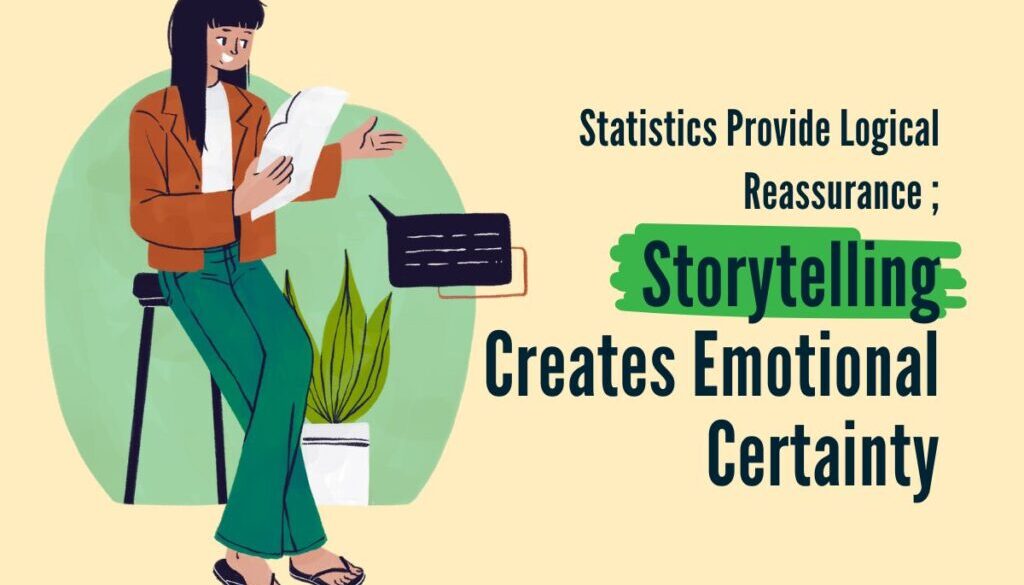
Statistics inform. Stories persuade.
A statistic tells the brain what happened.
A story shows the heart why it matters.
When prospects hear a story that mirrors their own struggle, they don’t analyze it—they step into it. Stories reduce resistance and increase attention because they feel human, not promotional.
Anyone can quote statistics but not everyone can tell a real story. Stories signal experience. They show that you’ve worked with people like them and understand the reality behind the problem—not just the metrics on a slide. In sales and marketing, trust closes deals faster than proof ever will.
What this looks like in real life
Scenario 1: Selling with numbers
A counselor starts the conversation by saying,
“Our program has a 92% placement rate. The average package is 8 LPA, and 300+ companies hire from us every year.”
The student listens. The numbers sound impressive—but distant.
They don’t connect to the student’s confusion, fear, or self-doubt.
The call ends with a polite: “I’ll think about it.”
Scenario 2: Selling with a story
The same counselor takes a different approach.
“Last year, a student came to us with similar marks and the same uncertainty you’re feeling right now. He wasn’t confident in his skills and wasn’t sure where he fit. The first few weeks were tough, but with mentorship and practice, things clicked. Today, he’s working in a role he never thought he’d get.”
Now the student is listening.
They see themselves in the story.
When the placement numbers come later, they don’t feel like claims—they feel like proof.
Where statistics actually belong
This doesn’t mean statistics are useless. They just shouldn’t lead the conversation. The most effective messaging follows a simple order:
- Start with a story to create emotional connection
- Use statistics to support and validate the story
- Let logic reinforce a decision that’s already emotionally made
Stories open the door. Numbers help keep it open.